Pallet Wrap vs Pallet Film: What Is the Difference?
Businesses looking for materials to secure palletised goods may encounter several similar terms, including pallet wrap, pallet film, stretch wrap and stretch film. In most cases, these names describe the same general type of packaging: stretchable plastic film wrapped around goods to help keep them together.
The more important distinction is usually between the different formats available. Film intended for manual application may have a different reel size or core from film manufactured for a pallet-wrapping machine. Handy wrap is narrower and designed for smaller bundles, while heat-shrink film uses an entirely different application process.
Martins Mill Packaging supplies a range of pallet wrap and film products for securing palletised goods, cartons, components and irregular loads.
The Short Answer
Pallet wrap and pallet film usually refer to the same type of stretch film. Both terms are commonly used for plastic film that is stretched around palletised goods to provide containment and help reduce movement.
Stretch wrap and stretch film are also widely used names for the same material. The film clings to itself and is applied under tension without needing heat.
However, not every roll is interchangeable. The film’s width, thickness, core, reel dimensions and intended application method must suit the job and any equipment being used.
What Is Pallet Wrap?
Pallet wrap is a stretchable plastic film applied around stacked goods. As it is pulled around the load, the tension in the film helps hold cartons and products together as one palletised unit.
It can also provide a degree of protection against:
- Dust and warehouse dirt
- Light moisture and splashes
- Scuffing of outer cartons
- Loose products becoming separated
- Minor movement during internal handling
Pallet wrap does not correct an unstable or poorly stacked load. Cartons should be arranged carefully on a suitable pallet before the film is applied.
It should not be treated as fully waterproof packaging or as a substitute for proper vehicle load restraint. The wrapped load may still need strapping, corner protection, covers or suitable restraint inside the vehicle.
What Is Pallet Film?
Pallet film is generally another name for pallet wrap. Suppliers, warehouse teams and manufacturers may use the two terms interchangeably.
The word “film” can also be used more broadly to describe several flexible plastic packaging materials. For this reason, a buyer should not order based on the product name alone.
Before purchasing, check:
- Whether it is stretch film or heat-shrink film
- Whether it is intended for hand or machine application
- The width and length of the roll
- The film thickness
- The core dimensions
- The colour and level of visibility
- Whether it is compatible with existing equipment
These details are more important than whether the supplier calls the product pallet wrap, pallet film or stretch film.
Is Stretch Film the Same as Pallet Wrap?
Stretch film is the broader technical description for film designed to stretch around products and cling to itself. Pallet wrap is stretch film being sold or used specifically for palletised loads.
The same basic material may also be used for:
- Bundling cartons
- Holding long components together
- Protecting furniture and appliances
- Securing awkwardly shaped goods
- Grouping small products for storage
Narrower stretch film used for smaller products is often described as handy wrap rather than pallet wrap.
Stretch Film and Shrink Film Are Different
Stretch film and heat-shrink film should not be confused. They may both be used around palletised goods, but they are applied differently.
Stretch film is pulled around the load under tension. It clings to itself and does not normally require heat.
Heat-shrink film or a heat-shrink pallet cover is placed loosely around the goods before controlled heat is applied. The material then contracts to form a closer fit around the load.
| Feature | Stretch Film | Heat-Shrink Film |
|---|---|---|
| Application | Stretched around the load | Placed around the load and heated |
| Heat required | No | Yes |
| Common format | Hand or machine rolls | Covers or centre-folded sheeting |
| Typical use | Routine load containment | Closer all-round coverage |
| Equipment | Applied by hand, dispenser or wrapping machine | Requires suitable heat-application equipment |
Heat-shrink products require an appropriate work area, equipment and safe operating procedure. They should not be selected simply because they appear to provide more coverage.
Hand Pallet Wrap
Hand pallet wrap is applied manually. The operator walks around the pallet while maintaining enough tension to hold the load together.
It is commonly used by businesses that:
- Wrap a manageable number of pallets
- Prepare loads in different parts of a warehouse
- Handle pallets of varying sizes
- Do not have a fixed wrapping machine
- Need a relatively flexible wrapping method
Some hand rolls have an extended core that projects beyond the film. This gives the operator built-in handholds and allows the roll to be applied without a separate dispenser.
Flush-core rolls do not have these projecting handles. Their correct application method depends on the product specification, and they may require a compatible dispenser or machine.
Do not assume that every flush-core reel fits every pallet-wrapping machine. Check the roll dimensions, core size and equipment requirements before ordering.
Machine Pallet Film
Machine pallet film is manufactured for use with compatible pallet-wrapping equipment. It is generally selected by warehouses and production sites handling repeated pallet loads.
A machine-led process can offer:
- More consistent application
- Controlled film tension
- Faster wrapping of repeated loads
- Reduced variation between operators
- A repeatable number of rotations or layers
The results still depend on correct machine settings and a suitable film specification. Too little film may not contain the load, while excessive tension can crush cartons or distort products.
Machine film must match the equipment. Important details can include reel width, core diameter, film thickness, stretch characteristics and maximum roll size.
A machine should also be suitable for the dimensions, weight and stability of the pallets being wrapped. Staff must receive appropriate instruction, and moving parts should be guarded and maintained according to the manufacturer’s requirements.
What Is Handy Wrap?
Handy wrap is a narrower form of stretch film used for smaller products, bundles and quick fastening tasks. It follows the same general principle as pallet wrap but is easier to handle around compact items.
The pallet and handy wrap range includes 100 mm handy wrap alongside wider pallet-wrap rolls.
Handy wrap may be useful for:
- Bundling small cartons
- Grouping tubes and profiles
- Keeping components together
- Securing protective material around a product
- Holding loose items during internal storage
- Wrapping irregular sections of a larger load
It is not normally a practical replacement for full-width wrap around a complete pallet. Using a narrow roll across an entire load can require more rotations and lead to inconsistent coverage.
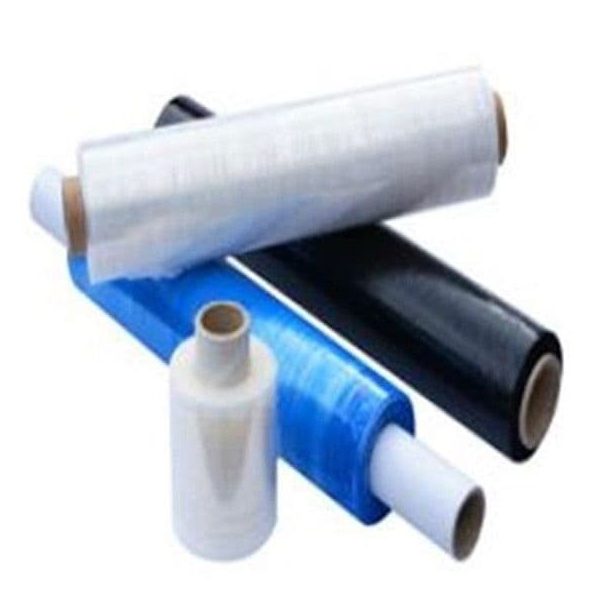
Clear Pallet Wrap
Clear pallet wrap keeps the contents and labels visible. This can be useful where employees need to inspect products, scan barcodes or confirm stock without removing the film.
It may suit:
- General warehouse storage
- Stock requiring frequent identification
- Mixed pallets with visible labels
- Goods-in and dispatch areas
- Loads that need visual inspection
Clear film does not make the load completely transparent once several layers have been applied. Labels should be positioned carefully and tested with any scanning equipment used on site.
Black Pallet Wrap
Black pallet wrap obscures the products underneath it. Businesses may use it when they do not want pallet contents to be immediately visible during handling, storage or delivery.
It can also help distinguish particular loads from those wrapped in clear film.
Black wrap should not be treated as a security system. It may conceal the goods, but it does not prevent access, theft or tampering. Valuable loads still require suitable security procedures and transport arrangements.
Coloured and Tinted Wrap
Some ranges include coloured or tinted films. These can support visual organisation when a business adopts a consistent colour-coding procedure.
For example, a site might use different colours to identify:
- Departments
- Stock status
- Delivery routes
- Product groups
- Loads awaiting inspection
Colour coding should be supported by labels or electronic stock records rather than used as the only means of identification. Colours can be confused, film may be replaced and different lighting conditions can affect visibility.
Does Thicker Film Always Mean Better Protection?
Film thickness is important, but a thicker film is not automatically the correct choice for every pallet.
A heavier or awkward load may require a more robust film, while a stable pallet of lightweight cartons may be secured with a lighter specification when it is applied correctly.
The suitability of the film also depends on:
- Load weight
- Pallet height
- Sharp corners and projections
- Film stretch and puncture resistance
- Number of layers applied
- Storage and transport conditions
- Whether hand or machine application is used
Using a thicker roll without controlling the application can increase material use without improving stability. Equally, reducing film thickness without testing the finished load may lead to tearing or insufficient containment.
Choosing Wrap for the Load
The film should be selected according to the pallet rather than relying on one roll for every product.
Consider:
- Whether the load is stable before wrapping
- Whether cartons overhang the pallet
- Whether the goods could settle during transport
- Whether sharp corners could puncture the film
- Whether labels must remain visible
- How frequently pallets are prepared
- Whether the load will be stored indoors or outside
- Whether additional strapping or edge protection is required
A tall or irregular load may require more than stretch film. Corner boards, strapping, anti-slip materials or changes to the stacking arrangement may be needed to create a stable unit.
Pallet Wrap Is Only Part of Load Security
Stretch film can help secure goods to a pallet, but the complete pallet must also be restrained appropriately when it is loaded into a vehicle.
Do not assume that a wrapped pallet can be placed inside a van or trailer without further restraint. Gaps between pallets and the vehicle structure can allow the complete unit to move during braking, cornering or acceleration.
The vehicle, load position and transport method will determine whether lashings, blocking, dunnage or other restraint measures are needed.
The pallet itself must also be suitable and undamaged. Film wrapped around a weak or broken pallet will not restore its structural strength.
When Might a Pallet Cover Be More Suitable?
Stretch wrap provides useful containment and limited protection against dust and light moisture. Goods needing broader coverage may require a different product.
Heat-shrinkable pallet covers fit over a load and contract when suitable heat is applied. They are available in sizes for standard and Euro pallets and can provide closer coverage around bulky or irregular goods.
A pallet cover may be considered where:
- The top of the load also needs covering
- Goods require additional protection during storage
- The load has an irregular shape
- A close-fitting outer cover is preferred
- The business has suitable heat-application equipment and procedures
Neither ordinary stretch wrap nor a pallet cover should be assumed to make goods suitable for unrestricted outdoor storage. The product specification, duration of exposure and sensitivity of the contents must all be considered.
Questions to Ask Before Ordering
When requesting pallet wrap or film, provide enough detail for the supplier to identify an appropriate option.
Useful information includes:
- Whether the film will be applied by hand or machine
- The make and model of any wrapping equipment
- The required reel width and core dimensions
- The approximate pallet dimensions
- The weight and type of goods
- Whether loads have sharp corners
- The number of pallets wrapped each day
- Whether labels need to remain visible
- The expected storage and delivery conditions
This reduces the risk of receiving film that does not fit the machine, dispenser or intended application.
The Difference Is Usually in the Format
Pallet wrap, pallet film and stretch film are generally different names for the same type of stretchable packaging material. The practical differences lie in the roll specification, application method, colour and intended use.
Hand wrap suits flexible or lower-volume work, machine film is intended for compatible pallet-wrapping equipment, and handy wrap is useful for smaller bundles. Heat-shrink film is a separate product that contracts when heat is applied.
Browse the pallet wrap and film range online, or contact Martins Mill Packaging with details of your loads, wrapping method and equipment for help selecting a suitable film.

Martins Mill Packaging
We are a Halifax, West Yorkshire based supplier of high quality industrial and commercial packaging, materials & solutions, providing local and national deliveries, and competitive pricing, and have been trading for over 20 years.