Strapping Machine vs Hand Strapping: Which Is Better for Pallets?
Manual pallet strapping can work well for warehouses, workshops and dispatch teams that prepare a manageable number of loads. It is flexible, relatively straightforward to introduce and allows staff to secure goods in different areas of a site.
Problems often arise not because hand strapping is unsuitable, but because the process has developed without much planning. Strapping reels may be stored away from the packing area, tools can be difficult to find and different employees may use different methods. These small inefficiencies add time to every pallet.
Before investing in a larger machine, it is worth reviewing the complete manual setup. The right strapping, tools, workstation and training may improve speed and consistency without committing the business to fixed machinery.
Martins Mill Packaging supplies strapping materials, tools and accessories for cartons, bundles, pallets and industrial goods.
Begin by Measuring the Current Process
It is difficult to improve pallet strapping without first understanding where time is being lost. Observe several normal packing shifts rather than judging the process during an unusually quiet or busy period.
Record:
- How many pallets are strapped each day
- How long one completed pallet normally takes
- How many straps are applied to each load
- How often staff need to collect tools or materials
- How frequently straps have to be adjusted or reapplied
- Whether completed pallets wait for strapping before dispatch
- Which load types cause the most difficulty
This can reveal whether strapping itself is the bottleneck or whether delays are being caused by poor stacking, missing materials, damaged pallets or an unsuitable packing area.
It may also show that only certain products require a different approach. A warehouse might handle most cartons efficiently by hand but struggle with one heavy, irregular or frequently dispatched load.
Use Strapping That Suits the Goods
A manual process will remain inconsistent if the strapping material is poorly matched to the load. The correct choice depends on the goods, their weight, how they behave during handling and the equipment used to apply the strap.
Polypropylene strapping is commonly used for general packing, cartons and suitable light or medium-duty palletised loads. Both hand and machine-grade versions are available, so the reel must be selected for the intended application.
Polyester strapping may be more appropriate for heavier or compressible loads that can settle, expand or shrink during storage and transport. Steel strapping is generally reserved for demanding industrial goods where plastic alternatives are unsuitable.
When reviewing the material, check:
- The strap width and specification
- Whether it is intended for hand or machine application
- The type of seal, buckle or joint required
- Whether the strap retains suitable tension for the load
- Whether it could mark or crush the packaging
- Whether sharp edges could damage the strap
Do not change to a narrower, lighter or cheaper reel without confirming that it remains appropriate for the application. Materials that look similar can have different performance characteristics.
Match the Tools to the Strapping
Manual strapping is much easier when the tensioner, sealer, cutter and closures are designed to work together.
A typical hand-strapping setup may include:
- A mobile or fixed reel dispenser
- A tensioning tool
- A sealer or crimping tool
- Compatible metal seals or buckles
- A suitable cutting tool
- Edge protectors where required
Using the wrong tool can lead to poor tension, unreliable joints, damaged strap and unnecessary physical effort. Check the tool specification against the strapping material and width rather than relying on appearance alone.
Tools should also be inspected regularly. Worn gripping surfaces, damaged cutters or poorly operating sealers can affect the quality of the finished strap and make the task harder for the operator.
Keep the Reel Under Control
A loose reel placed on the floor can unwind, collect dirt and create a trip hazard. Staff may also waste time untangling the strap or carrying the reel between pallets.
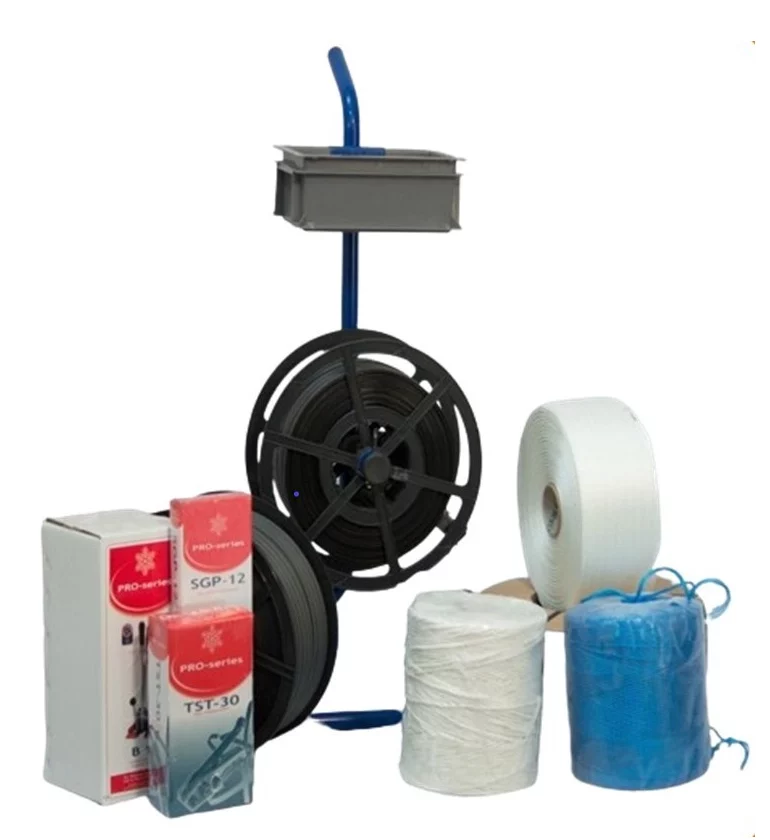
A dispenser trolley keeps the reel controlled and allows it to move with the operator. Some trolleys also provide storage for seals, buckles and small tools, helping to keep the complete setup together.
Position the dispenser so the strap feeds smoothly towards the load. Avoid routes where it must pass around shelving, beneath pallets or across busy walkways.
When several materials are used on one site, label each dispenser clearly. This reduces the chance of an employee applying the wrong strap to a load or using hand-grade material with incompatible equipment.
Create a Proper Strapping Station
Not every warehouse needs a permanent packing line, but repeated pallet strapping should have a clearly organised working area wherever possible.
The station should provide:
- Enough room to work around the pallet safely
- Level flooring in good condition
- Clear separation from vehicle and forklift routes
- Accessible strapping, seals and tools
- Suitable lighting
- A place for damaged materials and waste strap
- Space to inspect the completed load
Frequently used equipment should be within easy reach without cluttering the floor. Staff should not have to walk across the warehouse for seals, cutters or replacement reels every time a pallet is prepared.
A standard layout also makes it easier for different employees to follow the same process and notice when stock is running low.
Improve the Pallet Before Applying Strapping
Strapping cannot correct a badly constructed pallet. If cartons overhang the edges, heavy items are stacked at the top or large gaps remain between products, adding more tension may simply damage the packaging.
Before strapping, check that:
- The pallet is suitable and undamaged
- The load is distributed evenly
- Heavier items are positioned appropriately
- Cartons do not overhang the pallet unnecessarily
- Loose products have been contained
- There are no unstable gaps within the stack
- Sharp corners are protected
The load may also require pallet wrap, cardboard sheets, corner boards or other protective materials. Strapping and stretch film perform different functions, and some pallets need both.
Correcting the stacking arrangement can sometimes produce a greater improvement than changing the strapping equipment.
Standardise Where the Straps Are Positioned
If operators place straps in different positions, similar pallets may leave the warehouse with very different levels of support.
Create a simple packing instruction for regular products showing:
- The number of straps required
- The direction in which they should run
- The approximate position of each strap
- Which edge protectors should be used
- The correct closure method
- Any pallet wrap or additional containment required
Photographs or diagrams can be more useful than a long written description. Display the instruction near the packing area and update it whenever the product, box or pallet configuration changes.
Loads that vary considerably should still be assessed individually. A standard method is useful for repeat work, but it should not encourage staff to apply the same arrangement blindly to every pallet.
Use Edge Protection Where Needed
Tensioned strapping applies concentrated pressure where it passes over the load. This can crush cardboard corners, mark finished products or cut into softer packaging.
Edge protectors can help spread that pressure across a wider area. They may also reduce the chance of a sharp carton or product edge damaging the strap.
Consider protection where:
- Cartons deform as tension is applied
- The load has sharp or abrasive corners
- Several boxes need to remain aligned
- Strapping could mark a finished surface
- The pallet will be stored for an extended period
The protector must remain in the correct position while the strap is tightened. A loose corner piece that slips away from the edge will provide little benefit.
Make Tension More Consistent
One of the main limitations of manual strapping is variation between operators. Too little tension may allow movement, while excessive tension can damage cartons or products.
Consistency can be improved by:
- Using the same compatible tools for repeat loads
- Maintaining tensioners and sealers properly
- Training staff in one agreed application method
- Using clear packing instructions
- Checking representative completed pallets
- Investigating repeated failures rather than simply adding more strap
Staff should understand what an appropriately secured load looks and feels like. They should also know when a pallet falls outside the standard process and needs further assessment.
Consider a Battery-Powered Tool
A battery-powered combination tool can provide a middle ground between separate hand tools and a fixed strapping machine.
Depending on the model and compatible material, one tool may tension, seal and cut the strap. This can reduce repeated manual actions while allowing the operator to move between pallets and different parts of the site.
This type of equipment may be useful where:
- Pallet volumes have increased
- Loads are prepared in several locations
- A fixed machine would be impractical
- Manual tensioning is becoming physically demanding
- The business wants greater repeatability without a permanent line
Before purchasing, confirm the supported strapping material, widths, tension range, battery capacity, joint type and servicing requirements. The tool must suit the actual loads rather than simply being described as suitable for pallets.
Train Everyone Who Uses the Equipment
Manual tensioners, sealers and powered tools are work equipment. Employees need adequate instruction in their correct use, the risks involved and the precautions they must take.
Training should cover:
- Selecting the correct material and tools
- Inspecting equipment before use
- Keeping hands away from pinch and cutting points
- Applying tension without damaging the load
- Positioning and closing seals correctly
- Cutting and removing tensioned strap safely
- Dealing with damaged or jammed equipment
- Reporting faults
- Disposing of offcuts without creating hazards
New employees should not be expected to copy another operator without structured instruction. Refresher training may also be needed when equipment, materials or packing methods change.
Maintain Tools and Replace Damaged Equipment
Poorly maintained equipment can make manual strapping slower and less reliable. Establish a straightforward inspection and maintenance routine based on the manufacturer’s instructions.
Look for:
- Damaged handles and guards
- Worn gripping or tensioning components
- Blunt or chipped cutters
- Poorly aligned sealing jaws
- Loose components
- Damaged battery packs or chargers
- Contamination that affects tool movement
Faulty tools should be taken out of use until they have been repaired or replaced. Maintenance and repairs should only be carried out by people competent to perform the work.
Keeping a spare essential tool may also prevent the entire packing process stopping because one tensioner or sealer has failed.
Reduce Unnecessary Walking and Handling
Time studies often reveal that staff spend more time collecting materials and moving around the pallet than actually applying the strap.
Possible improvements include:
- Keeping a mobile kit beside the active packing area
- Placing replacement reels nearby
- Restocking seals and buckles at the start of each shift
- Positioning pallets so all required sides are accessible
- Removing waste strap promptly
- Preparing edge protectors before tensioning begins
These changes may only save a few seconds on one pallet, but the benefit becomes more noticeable across repeated daily dispatch work.
Check Completed Loads Consistently
A final check should confirm that the load is stable and the straps have been applied correctly before the pallet enters storage or leaves the site.
The inspection should consider:
- Whether every required strap is present
- Whether the strap is positioned correctly
- Whether closures appear secure
- Whether cartons or goods have been crushed
- Whether edge protectors remain in place
- Whether loose items can move
- Whether pallet wrap or other containment is complete
- Whether the pallet itself is still in suitable condition
Where repeat problems are found, record the product, operator, tools and materials involved. This can help identify whether the cause is training, equipment wear, inconsistent stock or the design of the pallet load.
Remember That Pallet Strapping Is Not Vehicle Restraint
Strapping goods together on a pallet does not automatically secure the complete pallet inside a van, trailer or other vehicle.
The transport arrangement may also require appropriate positioning, blocking, friction materials, lashings or other restraint measures. The correct method depends on the vehicle, load and journey.
Businesses should treat pallet preparation and vehicle load securing as connected but separate stages. A neatly strapped pallet can still move dangerously if it is not restrained properly inside the vehicle.
When Manual Improvements Are No Longer Enough
Even a well-organised hand-strapping process has limits. It may be time to consider powered or semi-automatic equipment when:
- Completed pallets regularly wait for strapping
- Daily volumes continue to rise
- Manual application cannot keep pace with production
- Repetitive effort remains a concern after workstation improvements
- Similar packages are strapped continuously at one station
- Variation persists despite suitable tools and training
- The measured labour saving could justify the investment
The term “strapping machine” covers several types of equipment. A semi-automatic table machine may be intended primarily for cartons and bundles rather than complete loaded pallets.
Martins Mill Packaging lists a range of strapping machines and tools, including mobile carts, manual tensioners, sealers, combination tools and battery-operated equipment. Check the dimensions, compatible materials and intended application carefully before selecting a product.
Improve the Process Before Automating It
A machine will not automatically resolve poor pallet construction, unsuitable strapping or a disorganised packing area. Automating an inefficient method may simply allow the same problems to occur more quickly.
Begin by measuring the current process, matching the material and tools to the load, organising the workstation and training staff in a consistent method. These steps may provide the improvement the warehouse needs without a larger investment.
Where volumes continue to rise, the information gathered during the review will also make it easier to choose suitable powered equipment. The business will understand its actual throughput, common load sizes, strapping specifications and expected time saving rather than purchasing on assumptions.
For help comparing strapping materials, manual tools and powered options, contact Martins Mill Packaging with details of the goods, pallet dimensions, current strapping method and approximate daily volume.

Martins Mill Packaging
We are a Halifax, West Yorkshire based supplier of high quality industrial and commercial packaging, materials & solutions, providing local and national deliveries, and competitive pricing, and have been trading for over 20 years.